NEPO Task Force Poised to Increase Overdose Crisis
Just two days after the US Supreme Court (SCOTUS) released a 9-0 opinion favoring physicians exercising their clinical judgment when prescribing medication to patients under the Controlled Substance Act, the Justice Department announced the formation of a new strike force targeting medical professionals prescribing and dispensing controlled substances. A June 29, 2022 “Justice Department’s Criminal Division Creates New England Prescription Opioid Strike Force” press release headline read “Justice Department’s Criminal Division Creates New England Prescription Opioid Strike Force to Focus on Illegal Opioid Prescriptions.”
“The mission of the NEPO Strike Force is to identify and investigate health care fraud schemes in the New England region, and to effectively and efficiently prosecute individuals involved in the illegal distribution of prescription opioids and other prescribed controlled substances. The NEPO Strike Force will primarily target criminal conduct by physicians, pharmacists, and other medical professionals, focusing upon both health care fraud and drug diversion offenses, as relevant based upon the facts of the particular case.”
Justice Breyer delivered the opinion of the Court in XIULU RUAN v. UNITED STATES. “Once a defendant meets the burden of producing evidence that his or her conduct was authorized, the Government must prove beyond a reasonable doubt that the defendant knowingly or intentionally acted in an unauthorized manner.” Pp. 4–16
The press conference was rife with misleading information.
Assistant Attorney General Kenneth A. Polite, Jr., of the Justice Department’s Criminal Division. stated “The NEPO Strike Force will help to address one of the root causes of the epidemic: unlawful prescription and diversion of opioids.”
According to the DEA’s National Drug Threat Assessment less than 1% of legally prescribed opioids are diverted. In 2021, 71,238 overdose were due to Synthetic Opioids (illicitly manufactured fentanyl (IMF).
U.S. Attorney Darcie N. McElwee for the District of Maine stated “While the trafficking of illegal drugs, in particular fentanyl, is well publicized, 23% of overdose deaths in Maine are the result of pharmaceutical opioids.”
Per the Maine Drug Death Report 2020:
“Pharmaceutical opioids… This category includes a minority of cases where there was a current prescription (19%) as well as those without a prescription (81%). Of those 118 pharmaceutical opioid cases, the overwhelming majority (82%) also included fentanyl as a co-intoxicant cause of death.
Of the 118 deaths due to pharmaceutical opioids, almost half (50, 42%) also had a non-pharmaceutical opioid listed as a cause.
-
- Of the 23 that died due to a drug for which
- they had a current prescription, 9 (39%) also had a non-pharmaceutical listed as a cause of their death
- The most common pharmaceutical opioids listed as a cause of death are buprenorphine (39, 33% of the pharmaceutical opioid deaths), methadone (27, 23%)
The Root Causes of the Opioid Crisis have been closely examined by researchers who found:
-
- Although methadone represented less than 5% of opioid prescriptions dispensed, one third of opioid-related deaths nationwide implicated methadone.
- Root causes identified by the panel were physician error due to knowledge deficits,
- Patient non-adherence to the prescribed medication regimen,
- Unanticipated medical and mental health comorbidities, including substance use disorders
Changing dynamics of the drug overdose epidemic in the United States from 1979 through 2016 The U.S. drug overdose epidemic has been inexorably tracking along an exponential growth curve since at least 1979. The overall mortality rate closely followed an exponential growth curve, the pattern itself is a composite of several underlying subepidemics of different drugs. Although there have been transient periods of minor acceleration or deceleration, the overall drug overdose mortality rate has regularly returned to the exponential growth curve.
This historical pattern of predictable growth for at least 38 years suggests that the current opioid epidemic may be a more recent manifestation of an ongoing longer-term process. This process may continue along this path for several more years into the future. Paradoxically, there has been substantial variability with which specific drugs have become dominant in varying populations and geographic locales. This variability all but negates the possibility of confident predictions about the future role of specific drugs.
During the live press conference it was stated that they wanted to replicate the success they had achieved in West Virginia. Proudly touting the number of doctors they had arrested. What they failed to mention is that overdose rates have increased in WV, not decreased.
So, just how is the Department of Justice measuring success in West Virginia?
A 2022 study “The DEA would come in and destroy you”: a qualitative study of fear and unintended consequences among opioid prescribers in WV found that “Providers felt that taking on patients who legitimately required opioids could jeopardize their career.”
“They gave examples of physicians in their own communities who were investigated … [and] had their practices ruined due to ongoing investigations even if they were never found to have done anything wrong,” Dr. Sedney said.
Unsurprisingly, some doctors said they wouldn’t prescribe anymore once the law took effect. “They wouldn’t even prescribe gabapentin,” said Dr. Sedney. In interviews, some patients desperate for pain control said they transitioned to illicit substances.
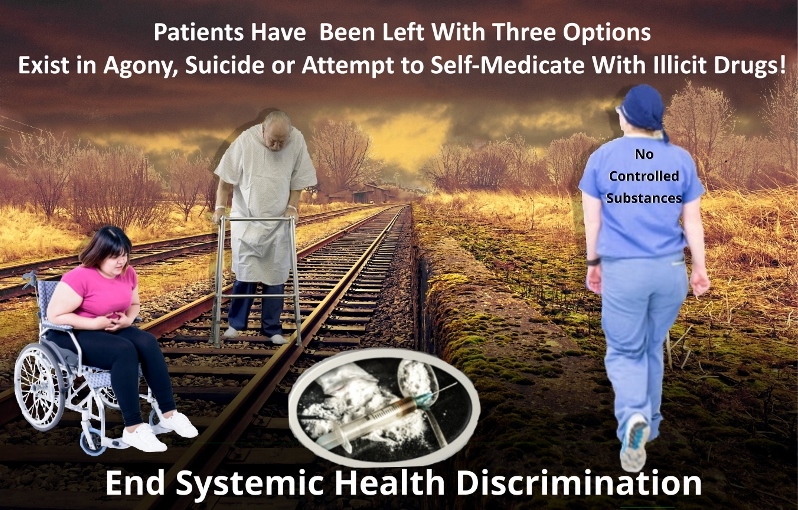
Unfortunately, the Justice Department’s NEPO Strike Force is likely to have a chilling effect on the medical community. The majority of the overdoses were individuals who appeared to have Substance Use Disorder and many were on Medically Assisted Treatment (MAT). Targeting pharmacists and clinicians will make them less inclined to prescribe and dispense these live saving medications, regardless of any statements encouraging prescribing.
Previous actions by state and federal government agencies have shown that both clinicians and pharmacists have been targeted for dispensing and prescribing in quantities that Qlarant data science report – opioid crisis algorithms flagged as questionable. As long as the government continues to interfere in the practice of medicine, and inflicts its subjective definition of legitimate medical treatment through the use of red flag programs that limit the autonomy of medical professionals the increase in patient abandonment, suicide and fatal overdoses will continue.
Medical professionals must feel safe to act in the best interests of their patients, and not fear that doing so will result in unwarranted criminal investigations or charges. The SCOTUS ruling in the Ruan case was a critical step in reestablishing patient-centered care and the autonomy of medical professionals. To further this goal patients and the medical community have joined together calling for the government to take action to Stop Criminalizing Patient Centered Care